
Budget-Friendly Coastal Retirement Tips
Dreaming of living near the beach on a fixed budget? Here's the short answer: it's possible, and more retirees pull it off along the Alabama Gulf Coast than most people expect, as long as you focus on the things that actually protect a monthly budget: low HOA fees, energy-efficient builds, and the tax benefits Alabama gives its seniors. The beaches in Gulf Shores and Orange Beach are free to visit any day of the year, and the homes that keep your budget healthy sit just a short drive inland.
In this post: where your retirement dollar goes furthest on the Alabama Gulf Coast, why HOA fees and insurance matter more than the sticker price, the Alabama senior tax breaks that actually apply, and the practical numbers that make a fixed-budget beach life work.
Can You Really Retire Near Gulf Shores on a Fixed Budget?
If you're asking whether budget friendly Gulf Shores living for seniors is a real thing, the honest answer is yes, with one big qualification: the budget-friendly part lives just inland, not on the sand itself.
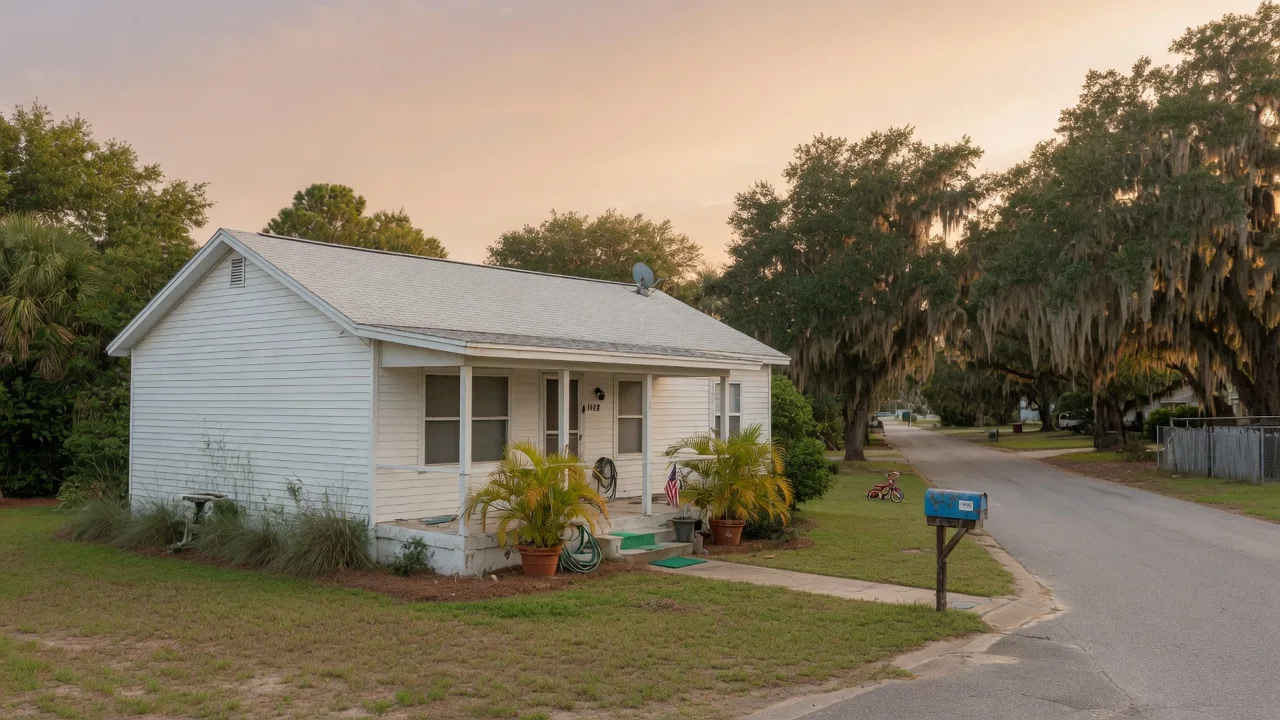
Gulf-front condos and homes within a few blocks of the water carry resort prices, and the wind and flood insurance that comes with a beachfront address is just as real. But Baldwin County is roughly the size of the state of Rhode Island, and the inland half is full of single-story, low-maintenance homes from the $200s and $300s, often with no HOA at all. You trade a Gulf view for a 15 to 25 minute drive to the beach, and in exchange you get a monthly budget that still has room for boat days, dinners out, and grandkids' visits. The beach tax is real, but you get to choose how much of it you pay.
Where Does a Retirement Dollar Go Furthest on the Alabama Gulf Coast?
The honest answer, town by town, depends on how much you want to pay for proximity versus how much you want to keep for living.
Foley: The Inland Hub With the Most Inventory
Foley is the default answer for good reason. It's grown into the retail and medical hub of the inland side, it has the biggest collection of affordable single-story homes and active adult communities, and it sits 15 to 20 minutes from the beach. Resale homes start in the $200s, newer construction from the $300s, and the HOA picture runs from full clubhouse packages to no HOA at all depending on the neighborhood. For the full breakdown, start with my Foley guide.
Lillian: Quiet Bayfront Living Without the Resort Price
Lillian sits on Perdido Bay right at the Alabama and Florida line, which gives it something Foley can't: water everywhere and almost no density. It's a short drive to Orange Beach one way and to Pensacola the other, and plenty of Lillian neighborhoods carry no HOA dues at all. Inland pockets offer single-story homes from the $200s and $300s, while bayfront lots command more but remain a fraction of a Gulf-front Orange Beach address. For the daily reality of this town, my Baldwin County relocation guide spends real time there.
Elberta, Summerdale, and Robertsdale: The Budget Plays
These are the small towns people pass on the way to the beach and never think twice about. Elberta, Summerdale, and Robertsdale are quiet, low-density, agricultural-rooted communities with bigger yards for the money and the county's lowest price points. Solid single-story homes under $300,000 are realistic, sometimes well under. Stores and services are a longer drive, so this trade suits retirees chasing the lowest possible payment.
Gulf Shores and Orange Beach: Pay for Proximity or Skip It
On the island itself, you're paying for the lifestyle and the location, and that's a legitimate choice if the budget allows. Condos and patio homes in the northern and inland sections of Gulf Shores start more reasonably, generally from the $300s, while Gulf-front inventory runs much higher and the HOA and insurance bills follow. If being steps from the sand is non-negotiable, it can be done, but it's the most expensive version of this retirement, and the monthly math has to work with eyes wide open.
Why Low HOA Fees Matter More Than the Sticker Price
On a fixed income, a payment is a payment, whether it's called a mortgage or an HOA bill. That's where a lot of retirees get tripped up.
Beachfront condo complexes on the Alabama Gulf Coast routinely carry HOA dues in the hundreds of dollars per month, and some exceed a thousand, because they cover pools, elevators, building insurance, common areas, and reserve funds. A $300 to $500 monthly difference is real money every single month, and it compounds over a decade of retirement. Inland neighborhoods, by contrast, often have no HOA at all.
The rule I give every retiree: read the full budget and reserve study, not the brochure, and add HOA dues to the mortgage when you compare one home to the next. I break down all the recurring costs in more detail in my post on the real cost of living on the Gulf Coast, because the sticker price never tells the whole story.
Do Energy-Efficient Builds Really Save Seniors Money?
Yes, and on the coast they save on two fronts at once: utility bills and insurance premiums.
Newer construction on the Gulf Coast is built to tougher hurricane codes, and builders increasingly use Fortified roofs, impact-rated windows, and tighter building envelopes. That means lower wind insurance premiums, and it means cooling a smaller, better-sealed space for less money every month. Alabama summers are long, so the air conditioning bill is not a rounding error. Compared to an older Gulf-front unit, an energy-efficient new build inland can shave a few hundred dollars a month off the combined insurance and utility line items, and that difference is a retirement budget by itself.
What Alabama Senior Tax Benefits Actually Apply?
This is the part that surprises out-of-state retirees, so here's what's actually on the books rather than what someone's cousin told them.
- Homestead exemption. Alabama homeowners who occupy their home as a primary residence can claim a homestead exemption, filed once with the Baldwin County Revenue Commission. It lowers the taxable assessed value and applies only to your primary residence, not a second home or rental.
- State tax exemption for seniors. If you're 65 or older, you are generally exempt from the state portion of property tax on your primary home once you've claimed your homestead exemption, with no income test. County taxes may still be due, which is why the next two items matter.
- Income-based county exemptions. Baldwin County offers additional exemptions for seniors with lower adjusted gross income, roughly $12,000 or less combined on the most recent state income tax return. These are claimed separately, and some require revalidation each year.
- Baldwin County senior appraisal freeze. If you're 65 or older and have kept your principal residence in Baldwin County for at least 10 years, the county can freeze the assessed value of your home for property tax purposes at the year before you claim it. That means your taxes don't climb as the market climbs, a quiet gift over a long retirement.
The headline takeaway: nothing is automatic. These exemptions only help if you file for them at the Baldwin County Revenue Commission, and the 65-plus state exemption usually just needs the homestead exemption on file first. It's a short trip or a phone call, and every year you don't file is a year you paid more than you had to.
Five Practical Tips for a Fixed-Budget Coastal Move
Here's the short list I hand to every retiree who tells me they're shopping on a fixed budget:
- Compare the total monthly number across three or four towns before you fall in love with one house. List price, HOA dues, insurance quote, and utilities, all on one page.
- Get a real insurance quote for each specific address before making an offer, and ask about the roof and Fortified status.
- Prefer single-story, step-free homes with wide doorways if aging in place matters. Remodeling later costs more than finding it now.
- Ask whether the neighborhood has an HOA, read the budget and reserve study if it does, and check for planned special assessments.
- File your homestead exemption and senior exemptions with the Baldwin County Revenue Commission right after closing, not next year.
If You're Asking Whether You Can Afford the Beach in Retirement, Here's the Short Answer
You don't have to be a millionaire to live at the beach, but you do have to be honest about the trade you're making. A Gulf-front condo is a lifestyle and a large monthly commitment. An inland single-story home, 20 minutes from the sand, is a lifestyle with room left over for what retirement is actually for: family, boat days, dinners by the water, and the freedom to enjoy the coast instead of working to cover it.
The retirees who love it here long term are the ones who ran the full monthly numbers, compared the towns, and bought the lifestyle they could sustain. If you want to see the specific kinds of homes that make this work, my post on affordable senior housing options near the beach walks through the inland towns and price points in detail.
People Also Ask
Is Gulf Shores, Alabama affordable for seniors?
On the island itself, no, not by Gulf Coast standards, but that's the wrong question to ask. Gulf Shores stays affordable for seniors when you shop the inland side of the county, where single-story homes from the $200s and $300s sit 15 to 25 minutes from the sand, often with no HOA. The beach itself is free, which is the part everyone actually wants.
What is the cheapest place to live near Gulf Shores?
Generally the small inland towns of Elberta, Summerdale, and Robertsdale, with parts of Foley close behind. Homes under $300,000 are realistic in all of them, and Lillian offers occasional quiet bayfront bargains. Prices vary a good bit depending on whether you're on the water, so the inland pockets are where the fixed-budget math works best.
Are property taxes lower for seniors in Alabama?
Alabama has some of the lowest property taxes in the country overall, and seniors get an extra layer of help: once you claim your homestead exemption and turn 65, you're generally exempt from the state portion of property tax on your primary home. Baldwin County also has income-based county exemptions and a senior appraisal freeze for longtime residents, and nothing is automatic, so filing at the Revenue Commission is the key step.
What are the hidden costs of retiring on the Gulf Coast?
Insurance is the big one. Wind coverage is expensive and not optional, flood insurance applies in some areas, and premiums climb the closer you get to the water. HOA dues on condos run into the hundreds of dollars a month. The way to beat both is an inland home with a Fortified or updated roof and no HOA, which is exactly what this fixed-budget approach is built around.
Where do retirees actually live near Orange Beach and Gulf Shores?
The biggest concentrations are in Foley and along the Foley to Gulf Shores corridor, where the active adult communities and the affordable single-story inventory sit, with quiet bayfront pockets in Lillian drawing retirees who want water access without the resort energy. Gulf-front condo towers in Orange Beach hold plenty of retirees too, just at a much higher monthly number.
Bottom Line
A fixed-budget retirement on the Alabama Gulf Coast is not a myth, but it lives in the inland half of Baldwin County. You trade a Gulf view for a 20-minute beach drive, and in exchange you get low HOA fees, cheaper insurance on newer and Fortified builds, Alabama's low property taxes with real senior exemptions, and a monthly budget that still has margin for actual living.
Run the total monthly number, compare the towns, and file your exemptions early. Do that, and the beach lifestyle isn't a stretch, it's a plan.
See y'all at the beach. — Andy
Want to see where your retirement dollar goes furthest?
Whether you're looking at Foley, Lillian, or the inland side of Gulf Shores, I can pull the current single-story homes that actually fit a fixed retirement budget, with the HOA and insurance numbers attached.
Call Now